Surgical Scar Treatment in Sarnia, Ontario
The surgery went well. Months later, though, the scar is still red, raised, itchy or wider than you hoped. Maybe it pulls when you move, or you notice it every time you get dressed.
At a glance
- OHIP
- Private fee
Usually not, unless the scar causes a medical problem such as restricted movement
No referral needed.
This is common, and it is often not the end of the story. Scars keep changing for a year or more, and there are proven ways to help them heal flatter, softer and less noticeable.
Assessment before treatment. Every scar and skin lesion is assessed before any treatment. The assessment combines Dr. Bastien's clinical experience and dermatology training with dermoscopy and digital imaging where appropriate.
Assessment first
Every scar is examined before any treatment is planned
Laser options
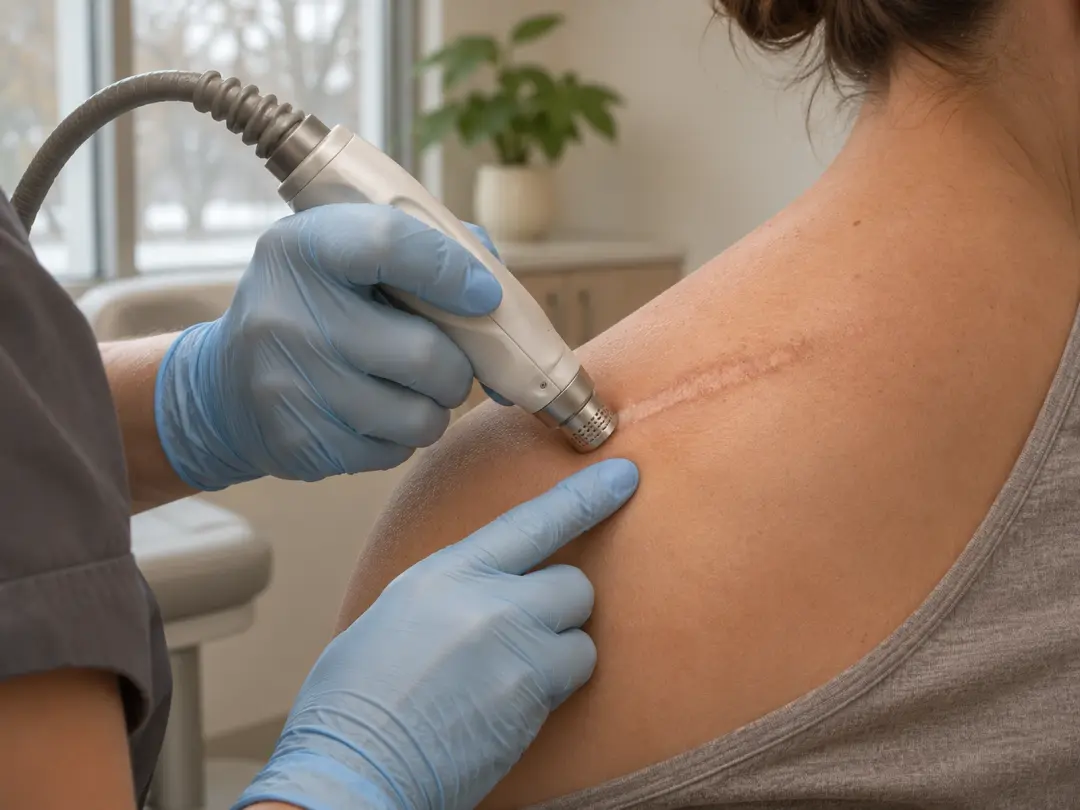
QuadroStar Pro Yellow for red scars, and Erbium:YAG for uneven texture
Surgical revision
Dr. Bastien is authorized by the CPSO to perform surgical excisions on the face and body, including wound closures up to the level of a skin flap
Quick answers
Are surgical scars permanent?
Yes, but most fade and flatten a great deal with time and care
How long does a scar take to mature?
About 12 to 18 months
When can treatment start?
Silicone once the wound closes. Laser often from about 6 to 8 weeks.
Can a scar be removed completely?
No, but it can usually be made much less noticeable
Is it covered by OHIP?
Usually not, unless the scar causes a medical problem such as restricted movement
Do I need a referral?
No
How a surgical scar heals
A scar is the skin's way of closing a wound. The body lays down collagen quickly to repair the cut, and that new tissue looks and feels different from normal skin.
Healing happens in stages, and a scar often looks worse before it looks better.
- 1
Wound closing
First 1 to 3 weeksStitches out, a thin pink or red line
- 2
Active scar
1 to 6 monthsRedness, firmness, itching, sometimes a raised ridge
- 3
Maturing
6 to 18 monthsThe scar slowly flattens, softens and fades to pale
This is why many treatments are timed to the stage of the scar. Early care shapes how it matures.
Types of surgical scars
Not every scar heals the same way. Your treatment depends on which type you have.
Fine line
What it looks like: Flat, thin and pale over time. What usually helps: Often needs nothing more than sun protection.
Red (erythematous)
What it looks like: Stays pink or red for months. What usually helps: Vascular laser such as QuadroStar Pro Yellow.
Hypertrophic
What it looks like: Raised and firm, but stays within the incision line. What usually helps: Silicone, pressure, steroid injections, laser.
Keloid
What it looks like: Grows beyond the original incision, often itchy. What usually helps: Steroid injections, silicone. Surgery alone often leads to regrowth.
Widened (stretched)
What it looks like: Flat but wider than the original cut. What usually helps: Surgical revision in some cases.
Depressed (atrophic)
What it looks like: Sits below the skin surface. What usually helps: Erbium:YAG resurfacing, sometimes revision.
Contracture
What it looks like: Tight scar that pulls or limits movement. What usually helps: Massage, therapy, sometimes surgical release.
Dark (hyperpigmented)
What it looks like: Brown or darker than the skin around it. What usually helps: Strict sun protection, topicals, time.
Keloids are more common in darker skin and on the chest, shoulders, earlobes and jaw. If you have had a keloid before, tell your surgeon before any new surgery.
What you can do at home
The first months after surgery matter most. Simple care can make a real difference to how your scar looks a year from now.
- Keep the wound clean and covered until it has fully closed, as your surgeon advised
- Start silicone once the wound has closed and stitches are out. Use gel or sheets daily for at least 2 to 3 months.
- Massage gently from about 2 to 3 weeks after the stitches are out, a few minutes twice a day, if your surgeon agrees
- Protect it from the sun. New scars darken easily. Cover them or use SPF 30 or higher for at least a year.
- Avoid stretching the scar with heavy lifting or strain in the early weeks
- Don't pick or scratch, even when it itches
Silicone has the strongest evidence of any home treatment. Vitamin E and most scar creams have much less proof that they help.
When to see a doctor about a scar
Book an assessment if your scar:
- Is getting bigger, thicker or spreading past the incision
- Stays red, raised or itchy after 3 to 6 months
- Is painful or tender, or limits movement
- Bothers you, even if it looks normal to others
See your surgeon or family doctor right away if a healing wound becomes hot, swollen, opens up or leaks pus, as these can be signs of infection.
Treatment options for surgical scars
When home care is not enough, in-clinic treatment can help. Many scars respond best to a combination.
QuadroStar Pro Yellow laser
Best for: Red or pink scars, early raised scars
What it does: Targets the small blood vessels that keep a scar red and active
Erbium:YAG laser resurfacing
Best for: Uneven, bumpy or depressed scars
What it does: Smooths the surface and prompts new collagen
Steroid injections
Best for: Hypertrophic scars and keloids
What it does: Flattens and softens the scar, and eases itching
Surgical scar revision
Best for: Widened, badly placed or tight scars
What it does: Removes the old scar and closes the skin more neatly
Silicone and pressure
Best for: Most new scars
What it does: Hydrates the scar and calms overactive healing
Old scars can still improve. A scar that is years old is mature, so changes are slower, but laser resurfacing and revision can still make a visible difference.
Laser treatment for surgical scars
Laser works best on scars that are red, raised or uneven, rather than flat pale lines.
The QuadroStar Pro Yellow laser uses yellow light to reduce redness and calm an active scar. It is often used early, from about 6 to 8 weeks after surgery.
The Erbium:YAG laser removes very thin layers of the scar surface. This blends the edges into the surrounding skin and encourages smoother collagen.
| Details | |
|---|---|
| Sessions | Usually 3 to 5, about 4 to 6 weeks apart |
| Comfort | Numbing cream is used. Most people feel warmth or snapping. |
| Downtime | Redness for a few days. Erbium:YAG may cause 5 to 7 days of flaking. |
| Results | Build gradually over 3 to 6 months |
Surgical scar revision
Some scars are too wide, raised or tight for laser alone. Scar revision removes the old scar and closes the skin again with careful technique.
Revision does not erase a scar. It replaces it with a new one that is usually finer, flatter or better placed.
- Done in clinic under local anaesthetic
- Usually takes 30 to 60 minutes, depending on size
- Stitches come out in about 5 to 14 days
- The new scar then needs the same care and time to mature
Wide revisions and surgical release of tight scars may use a skin flap to close the wound with less tension. Dr. Bastien is authorized by the CPSO to perform surgical excisions on the face and body, including wound closures up to the level of a skin flap.
Keloids are usually not treated with surgery alone, because they often grow back. Steroid injections are commonly combined with or used instead of surgery.
When to start treatment
Timing matters. Treating too early or waiting too long can both limit results.
- 1
Wound closed, stitches out
Silicone gel or sheets, sun protection, gentle massage
- 2
From about 6 to 8 weeks
Vascular laser for redness, steroid injections for raised scars
- 3
From about 3 months
Erbium:YAG resurfacing for texture
- 4
After about 12 months
Surgical revision, once the scar has matured
Dr. Bastien will advise the right timing for your scar at your assessment.
What to expect: results
The goal is a scar that is flatter, softer, paler and less noticeable. A scar cannot be removed completely.
- Red and raised scars usually respond best
- Itching and tenderness often improve along with appearance
- Old, pale scars change more slowly
- Keloids can return and may need ongoing treatment
Results vary from person to person.
Cost of surgical scar treatment in Sarnia
Scar treatment for appearance is cosmetic and not covered by OHIP. OHIP may cover treatment when a scar causes a medical problem, such as a contracture that limits movement.
Related treatments
- Acne Scar TreatmentErbium laser resurfacing and other treatments that soften acne scars over a series of sessions.
- Erbium YAG LaserA resurfacing laser that removes thin layers of skin. Dr. Bastien uses it for scars and small harmless growths.
- QuadroStar Pro Yellow LaserA 577 nm laser for redness, broken capillaries, red spots and venous lakes, usually with no downtime.
Frequently asked questions
Can surgery scars be removed completely?
No. Every scar is permanent, but treatment can make it much flatter, paler and harder to notice.
What should I put on a new surgical scar?
Once the wound has closed, silicone gel or sheets are the most proven option. Add daily sun protection for at least a year.
How long should I keep a surgical scar covered?
Keep it covered until the wound has fully closed, usually 1 to 2 weeks, or as your surgeon advised. After that, cover it from the sun for a year.
Why is my surgery scar still itchy months later?
Itching is common while a scar is active and may last up to a year. Ongoing itching with a raised scar can be a sign of a hypertrophic scar or keloid and is worth having checked.
How long does it take a surgical scar to fade?
Most scars mature over 12 to 18 months. They usually fade from red to pale and become flatter over that time.
Can old surgical scars be treated?
Yes. Mature scars change more slowly, but laser resurfacing and revision can still improve their look and feel.
Does laser treatment for scars hurt?
Numbing cream is used, so most people feel warmth or a snapping sensation rather than pain.
Do I need a referral?
No. You can book an assessment directly at 1692 Murphy Rd, Sarnia, by calling 1-866-550-MOLE (6653).
Book a consultation
You don’t need a referral. Dr. Bastien examines the area first and tells you whether you need treatment.
1692 Murphy Rd, Sarnia
Monday to Friday, 8:30 am to 4:30 pm
Free parking on site