Seborrheic Keratosis Removal in Sarnia
A seborrheic keratosis (SK) is a common, non-cancerous "stuck-on" skin growth. Most don’t need treatment, but you can have one removed if it itches, catches on clothing or simply bothers you.
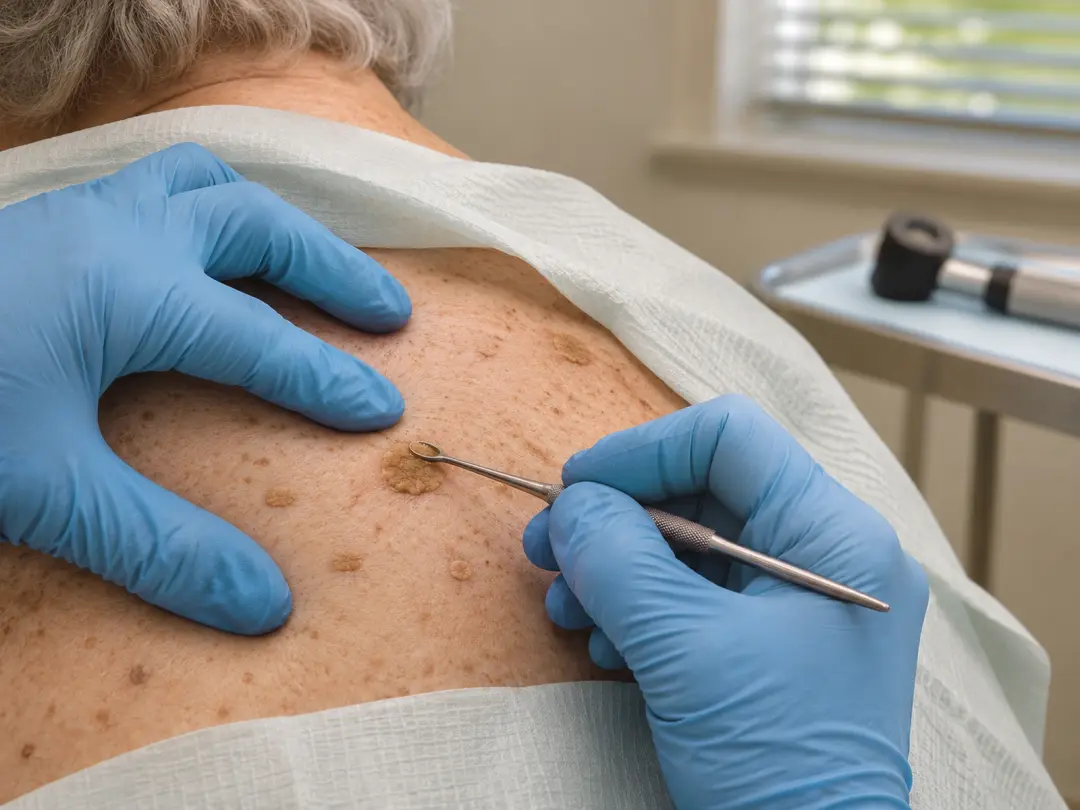
At a glance
- Visit
- About 15 to 30 minutes
- Healing
- About 1 to 4 weeks
- OHIP
- Private fee
Usually not, when removal is for appearance
No referral needed.
This page explains how seborrheic keratoses are told apart from skin cancer, how they are removed, what healing is like, and what removal costs in Ontario.
Not cancerous
But some skin cancers look similar, so a spot should be examined before it is removed
Usually optional
Most don’t need treatment unless they itch, get irritated or bother you
Options
Freezing, scraping, shave removal, heat or Erbium YAG laser, matched to the growth
Quick answers
Is it cancer?
No. Seborrheic keratoses are not cancerous, but a spot that looks like one still needs to be examined.
Does it need to be removed?
Usually not. Removal is a personal choice.
How is it removed?
Freezing, scraping, shave removal, heat or laser
How long is the visit?
About 15 to 30 minutes
How long does it take to heal?
About 1 to 4 weeks, depending on the method
Does OHIP cover it?
Usually not, when removal is for appearance
What is a seborrheic keratosis?
A seborrheic keratosis is a common growth made of extra skin cells that build up on the surface of the skin. It is not cancer and it is not contagious.
It often looks like a dab of wax or a barnacle stuck onto the skin. You may also hear it called a senile wart, brown wart or basal cell papilloma.
Colour
Tan, brown or black.
Surface
Waxy, warty, scaly or slightly crusted.
Edges
Clearly outlined, with a "stuck-on" look.
Size
A few millimetres to larger than a coin.
Where
Back, chest, face, scalp, temples and neck. Not on the palms or soles.
How many
One, or dozens. Some people have hundreds.
Why do they appear?
The exact cause is unknown. They become more common with age, they often run in families, and sun exposure may play a part.
Despite the name, they are not linked to oil glands, and they are not caused by a virus like common warts.
Types you may hear about
Stucco keratosis
Small, dry, white or grey bumps, often on the lower legs, ankles and arms
Dermatosis papulosa nigra
Small dark bumps that tend to appear on the cheeks and around the eyes in people with darker skin
Irritated seborrheic keratosis
One that has been rubbed or picked, so it looks red, crusted or inflamed
Easily mixed up with
Seborrheic dermatitis
A flaky, red rash on the scalp, face or chest. It is a skin condition, not a growth.
Actinic keratosis
A rough, scaly sun-damage patch that can be a precancerous change. It needs assessment.
Common wart
A rough bump caused by a virus. It can spread.
Age spot (solar lentigo)
A flat brown patch with no raised surface.
Mole or melanoma
Can look similar to a seborrheic keratosis, which is why spots are examined rather than guessed.
Is it a seborrheic keratosis or skin cancer?
A seborrheic keratosis is not cancer, and it is not considered precancerous. It does not turn into melanoma.
The problem is that some skin cancers can look like one. When a person has many seborrheic keratoses, a new cancer can also be harder to notice among them.
That is why we do not recommend self-diagnosis. A spot should be examined before it is called harmless or removed.
| Fits a typical seborrheic keratosis | Needs to be checked soon |
|---|---|
| Looks "stuck on", waxy or warty | Bleeds without being scratched or injured |
| Clear, sharp edges | Grows or changes quickly in size, shape or colour |
| Changes very slowly, over months or years | Has several colours, or a new dark area |
| Looks similar to your other spots | Looks different from your other spots |
| Occasionally itchy or irritated | Is sore, or does not heal |
A sudden crop of many new growths
Very rarely, many seborrheic keratoses appearing quickly, often with itching, can be linked to an underlying medical problem. This is known as the Leser-Trélat sign.
If this happens, see a doctor promptly.
How we check a spot
- Dr. Bastien looks at the growth and asks how long it has been there and whether it has changed
- Dermoscopy shows the pattern of the spot under magnification
- If you have many spots, FotoFinder whole-body mole mapping can record them so changes are easier to see over time
- If anything looks unusual, tissue can be sent to a lab for testing before or instead of cosmetic removal
Want to know more? See our skin cancer assessment and FotoFinder mole mapping pages.
Does a seborrheic keratosis need to be removed?
In most cases, no. A seborrheic keratosis is harmless, so treatment is usually a choice rather than a medical need.
People most often choose removal for these reasons:
- The growth looks unsightly, especially on the face, neck or chest
- It itches or feels irritated
- It catches on clothing, bra straps, belts, jewellery or when shaving
- It bleeds or gets inflamed after being rubbed
- You want it examined and tested because you are not sure what it is
Removing one does not stop new ones from forming elsewhere. If you have many, we can plan treatment in stages, starting with the ones that bother you most.
If you are happy to leave a confirmed seborrheic keratosis alone, that is a perfectly reasonable choice.
How is a seborrheic keratosis removed?
Several methods work. The right one depends on how thick the growth is, where it sits, how many you have and your skin tone.
Freezing (cryotherapy)
How it works: Liquid nitrogen freezes the growth so it falls away
Often suited to: Small, thin growths
What to expect: Stinging for a few seconds, then a blister or crust that sheds in about 2 to 4 weeks. The skin can lighten.
Scraping (curettage)
How it works: The growth is scraped off the surface after numbing
Often suited to: Thicker, raised growths
What to expect: A flat, pink area that usually re-covers with skin in about a week
Shave removal
How it works: A blade shaves the growth level with the skin
Often suited to: Raised growths, or when a sample is needed for the lab
What to expect: Numbing first, then a small shallow wound
Heat (electrocautery)
How it works: Heat seals the base and controls bleeding, often after scraping
Often suited to: Stubborn or thick growths
What to expect: Used sparingly, because heat is more likely to leave a mark
Erbium YAG laser
How it works: The laser vaporizes the growth in thin layers
Often suited to: Growths on the face, or where fine control matters
What to expect: Numbing cream first. Redness and crusting can last several days to about 2 weeks.
Surgical removal with stitches
How it works: The growth is cut out and the skin closed
Often suited to: Rare. Used if the diagnosis is uncertain.
What to expect: Tissue goes to the lab. A fine line scar is possible.
What is the safest way to remove one?
The safest start is a proper diagnosis. Once we are confident the growth is a seborrheic keratosis, the method is matched to the growth.
No single method is right for every spot. A thin spot on the chest may only need freezing. A thicker one may suit scraping.
Freezing or scraping?
Both give good cosmetic results in studies. Some patients prefer freezing because it needs less wound care afterward, although it can sting more at the time.
Scraping needs a few days of simple wound care. Either method can leave a lighter or darker mark for a while.
When tissue is sent to a lab
- A spot looks unusual, or different from your others
- It has changed, bled or not healed
- The diagnosis is not certain
Testing costs extra. We will tell you before we send anything.
Can you remove a seborrheic keratosis at home?
We do not recommend it. Home removal can cause infection, bleeding and scarring, and the growth may not be what you think it is.
A seborrheic keratosis may look easy to pick off with a fingernail. The skin underneath is then left raw, and the growth often comes back.
Wart creams and salicylic acid
Seborrheic keratoses are not warts, so wart products are not designed for them. They can irritate the skin.
Apple cider vinegar, castor oil, baking soda, tea tree oil, essential oils, Vicks
We are not aware of reliable evidence that these work. Some can burn or inflame the skin.
Hydrogen peroxide, glycolic acid, urea or retinol creams
Not a standard way to remove these growths. They can cause redness and peeling.
Freezing kits
Weaker than clinic freezing, and used on a spot nobody has confirmed. Can leave marks.
Cutting, scraping, picking or tying off
Risk of infection, bleeding and scarring. A cancer that was mistaken for an SK could be partly removed and missed.
"Plasma pens" and other removal gadgets
Can burn the skin and leave scars.
Prescription creams such as 5-fluorouracil or imiquimod
Used for other skin conditions, such as sun-damage patches. They are not a standard treatment for these growths and should only be used under a doctor’s direction.
If a growth bothers you, an examination is a safer first step than any home method.
See someone promptly if a growth you have treated at home
- Bleeds, or keeps bleeding
- Becomes red, swollen, painful or starts to ooze
- Comes back quickly, or looks different from before
Seborrheic keratosis on the face, eyelids, scalp, back and other areas
Where the growth sits changes the best approach. Some areas need extra care.
Face and forehead
Skin here is delicate and very visible. Gentle freezing or Erbium YAG laser are common choices. Sun protection afterward helps avoid dark marks.
Eyelids and near the eye
Needs extra care. We treat only growths that can be reached safely, away from the eye itself. Others may need a different kind of specialist.
Scalp and hair
Growths here can be hidden by hair and irritated by combing or shaving. Sun-damaged scalp skin can have other growths that look similar, so these are examined carefully.
Back and chest
The most common spot, often with many growths. Freezing is often used, sometimes over several visits.
Neck, ears, underarms and skin folds
Rubbing from clothing and jewellery can irritate growths. Some may be skin tags, which are treated differently.
Skin of colour
Small dark bumps on the cheeks are common. Treatment can leave lighter or darker marks, so we choose gentle methods and talk through the risk first.
Many growths at once
We can treat several in one visit. Larger numbers are usually spread over more than one visit so your skin heals well.
If you have many, we may suggest FotoFinder mole mapping. It keeps a record of your skin so new or changing spots are easier to find.
Pregnancy and breastfeeding
Tell us if you are pregnant or breastfeeding. Cosmetic removal of a harmless growth can usually wait, and we will talk through your options.
What to expect: the visit, pain, healing, scarring and regrowth
Your visit
- 1
Examination: Dr. Bastien checks the spot and asks about changes, itching or bleeding
- 2
Plan: we explain the options, the likely result and the fee before anything is done
- 3
Numbing: local anesthetic or numbing cream is used when the method needs it
- 4
Treatment: removal takes a few minutes
The whole visit is usually 15 to 30 minutes.
- 5
Aftercare: you leave with simple written care instructions
Does it hurt?
Freezing stings or burns for a few seconds. Scraping and shave removal are done after numbing, so you feel pressure rather than sharp pain. Laser uses numbing cream first.
Most people describe the discomfort as brief and manageable. Everyone's sensitivity is different.
| Freezing | Scraping or shave | Erbium YAG laser | |
|---|---|---|---|
| During treatment | Brief sting or burn | Numbed, so mostly pressure | Numbing cream, then a snapping or warm feeling |
| What you see afterward | Redness, then a blister or crust | A flat pink or raw area, then a scab | Redness and crusting |
| Usual healing time | About 2 to 4 weeks to shed | About 1 to 2 weeks | About 1 to 2 weeks |
| Wound care | Minimal | A few days of cleaning and covering | Gentle cleaning and moisturizing |
Aftercare basics
- Keep the area clean, and covered if we advise it
- Do not pick at the scab or crust. Let it fall off on its own.
- Protect the area from the sun and use sunscreen to help avoid dark marks
- Call us if the area becomes increasingly red, swollen or painful, oozes pus, or you develop a fever
Will it leave a scar?
Our aim is a smooth result, but we cannot promise there will be no mark. Most treated spots heal well.
The skin can end up lighter or darker for a while, and this often fades. Deeper heat treatment and picking at the area make marks and scars more likely.
Will it grow back?
A growth that has been fully removed does not usually return in the same spot. New ones can appear elsewhere, and a few spots may need a second treatment.
If you have many, a follow-up visit helps keep them under control.
How much does seborrheic keratosis removal cost in Sarnia?
The fee depends on the method and how many growths you treat. Fees are in Canadian dollars.
Does OHIP cover seborrheic keratosis removal?
Usually not. Ontario does not cover services done only to improve appearance. Removing a harmless growth because you dislike how it looks is paid for by the patient.
Sometimes removal is for a medical reason, such as a growth that bleeds repeatedly or a spot that needs to be tested. In those cases coverage may be different, and we will explain this before we begin.
What about private insurance?
Most extended health plans treat cosmetic removal as not covered. Check your plan, and ask for a receipt if you wish to submit one.
Who pays for the same procedure elsewhere?
Cosmetic removal of seborrheic keratoses is generally self-pay in Ontario, whatever type of clinic you visit.
Where to get seborrheic keratosis removal in Sarnia
Dr. Bastien Mole Clinic is at 1692 Murphy Rd, Sarnia. Every growth is examined before it is treated.
Can my family doctor check it first?
Yes. Your family doctor can look at a spot and tell you whether it needs to be checked further. Some family doctors do minor procedures and some do not, so ask your doctor's office.
You do not need a referral to book a skin assessment with us.
What to look for in any clinic
- The growth is examined and the diagnosis confirmed before it is treated
- Options and risks are explained in plain language
- Unusual spots can be sent to a lab
- Fees are clear before treatment starts
- You receive written aftercare instructions
- Anything concerning is followed up, not just treated
Related treatments
- Skin Tag RemovalRemoval of skin tags by snipping, freezing, heat or laser. Several tags can come off in one visit.
- CryotherapyFreezing with liquid nitrogen for sun-damage patches, seborrheic keratoses, skin tags and selected early skin cancers.
- Erbium YAG LaserA resurfacing laser that removes thin layers of skin. Dr. Bastien uses it for scars and small harmless growths.
Frequently asked questions
Is seborrheic keratosis cancer?
No. A seborrheic keratosis is a non-cancerous growth, and it is not considered precancerous. Some skin cancers can look similar, so a new or changing spot should be examined before it is assumed to be one.
Can a seborrheic keratosis be removed, and what is the safest way?
Yes. Freezing, scraping, shave removal, heat and laser can all remove one. The safest first step is an examination to confirm what the growth is. After that, the method is matched to its thickness, location and your skin tone.
Does seborrheic keratosis removal hurt?
Discomfort is usually brief. Freezing stings for a few seconds. Scraping and shave removal are done after numbing, and laser starts with numbing cream. Sensitivity varies from person to person.
Will removal leave a scar?
Most treated spots heal well, but we cannot promise there will be no mark. Skin can stay lighter or darker for a while, and this often fades. Picking at the area and deeper heat treatment raise the chance of a scar.
Will a seborrheic keratosis grow back?
A growth that is fully removed does not usually return in the same place. New ones can form elsewhere, and a few spots need a second treatment. If you tend to get many, a follow-up visit helps.
Can I remove a seborrheic keratosis at home?
We do not recommend it. Home methods can cause infection, bleeding and scarring, and the spot may not be a seborrheic keratosis at all. Examining it first is the safer step.
Can my family doctor in Sarnia check a seborrheic keratosis before removal?
Yes, your family doctor can look at a spot and advise on next steps. You can also book directly with our clinic, and no referral is needed.
Having a spot examined in Sarnia
To have a spot examined, contact the clinic.
Serving Sarnia and Lambton County
Address
1692 Murphy Rd, Sarnia, ON N7S 2Z3
Hours
Monday to Friday, 8:30 am to 4:30 pm
Phone
1-866-550-MOLE (6653)
Email
Reception@drbastienmoleclinic.com
Parking
Free on site
Related pages
- Benign lesion removal
- Skin cancer assessment and referrals
- FotoFinder whole-body mole mapping
This page is for general information and is not a diagnosis. Only a clinician who has examined your skin can tell you what a spot is. Results vary from person to person.
Book a consultation
You don’t need a referral. Dr. Bastien examines the area first and tells you whether you need treatment.
1692 Murphy Rd, Sarnia
Monday to Friday, 8:30 am to 4:30 pm
Free parking on site