Scar Treatment Assessment in Sarnia, Ontario
Most people with a scar ask the same quiet question: will this get better on its own, or should I do something about it? Some have waited years, unsure whether it was worth asking.
At a glance
- Visit
- About 20 to 30 minutes
- OHIP
- OHIP may cover
Cosmetic scar care is not. Painful or tight scars that limit movement may be.
No referral needed.
The honest answer depends on the scar. Its type, age, colour and depth all change what will help, and what will not.
A scar treatment assessment answers that question before you spend money or time on treatment.
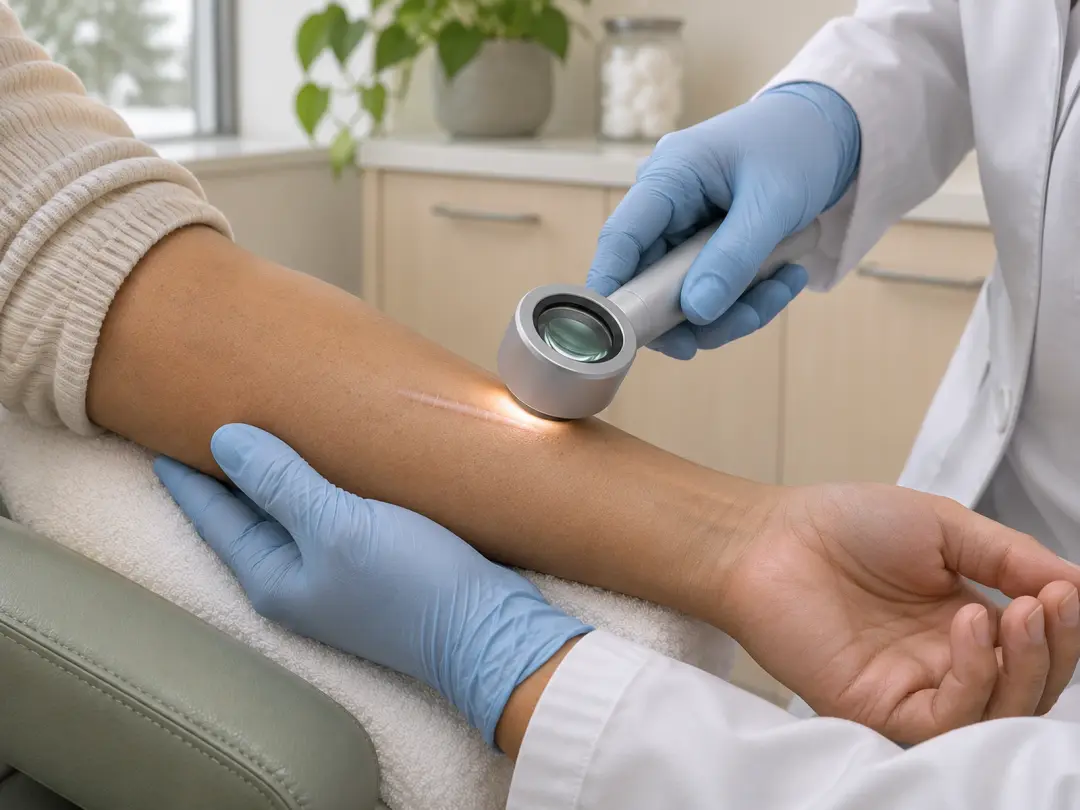
Assessment before treatment. Every scar and skin lesion is assessed before any treatment. The assessment combines Dr. Bastien's clinical experience and dermatology training with dermoscopy and digital imaging where appropriate.
What you get
A clear explanation of your scar type and how it is likely to change
Your options
From home care to laser, injections or surgical revision
No pressure
Sometimes the right advice is to wait, or to do nothing at all
Quick answers
Will my scar fade on its own?
Most new scars improve for 12 to 18 months. Raised or wide scars often need help.
Can old scars be treated?
Yes. Mature scars change more slowly, but laser and revision still help.
Can a scar be removed completely?
No, but most can be made much less noticeable
How long is the visit?
About 20 to 30 minutes
Is it covered by OHIP?
Cosmetic scar care is not. Painful or tight scars that limit movement may be.
Do I need a referral?
No
Why assess a scar before treating it?
Scars look simple, but they are not all the same. A treatment that flattens one scar can make another worse.
- A keloid cut out without other treatment often grows back larger
- A red, active scar responds to different care than a pale, mature one
- A sunken scar needs a different approach than a raised one
- Rarely, a spot that looks like a scar is actually a skin cancer, such as a basal cell carcinoma
An assessment makes sure the plan fits your scar, and that nothing more serious is missed.
Scar Treatment Assessment: specific treatments
How is a scar assessed?
Doctors look at a scar in a structured way, often using features from recognized scar scales.
Colour
What is checked: Red, pink, brown, pale or white. Why it matters: Red means the scar is still active. Pale means mature.
Height
What is checked: Raised, flat or sunken. Why it matters: Guides whether to flatten, resurface or fill.
Thickness and feel
What is checked: Soft, firm or hard. Why it matters: Firm scars may respond to injections.
Size and borders
What is checked: Within the wound, or growing past it. Why it matters: Growing past the wound suggests a keloid.
Movement
What is checked: Does it pull or limit motion? Why it matters: Tight scars may need release.
Symptoms
What is checked: Itch, pain, tenderness. Why it matters: Ongoing symptoms suggest an active scar.
Age
What is checked: Months or years old. Why it matters: Sets the right timing for treatment.
Your skin type, history of keloids, and how the scar was caused are also part of the assessment.
Types of scars
Most scars fall into one of four main groups.
Flat or fine line
What it looks like: Thin, level with the skin, pale over time. Common causes: Healed cuts and well-closed surgery.
Hypertrophic
What it looks like: Raised and firm, stays within the wound. Common causes: Surgery, burns, piercings.
Keloid
What it looks like: Raised, grows beyond the wound, often itchy. Common causes: Surgery, acne, piercings, even minor injury.
Atrophic (sunken)
What it looks like: Dips below the skin surface. Common causes: Acne, chickenpox.
Contracture
What it looks like: Tight scar that pulls the skin. Common causes: Burns, large wounds.
Darker skin and a family history of keloids raise the risk of raised scars.
How scars heal over time
Every scar goes through the same healing stages. Knowing where yours is helps decide whether to treat now or wait.
- 1
Inflammation
First daysBleeding stops and the body cleans the wound
- 2
Repair
Weeks 1 to 6New tissue and collagen fill the wound
- 3
Active scar
Months 1 to 6Scar is often red, firm and itchy
- 4
Maturing
Months 6 to 18Scar flattens, softens and fades
Is my scar healing well? A healthy scar slowly gets flatter, softer and paler. At 2 months, a surgical scar is often still pink and slightly firm, which is normal.
Signs to get it checked
- It keeps growing, thickening or spreading past the wound
- It is still red, raised and itchy after 6 months
- It is painful, or limits movement
- It bleeds, breaks open or changes in an old scar
An old scar that opens, bleeds or changes years later should always be examined.
What happens at your assessment
- 1
Your story
How the scar happened, how old it is, what bothers you and what you have tried
- 2
Examination
Dr. Bastien checks colour, height, firmness, size and movement, often with dermoscopy
- 3
Photos
Standard photos may be taken to track change over time, with your consent
- 4
Your plan
What type of scar it is, realistic results, options, timing and cost
The visit takes about 20 to 30 minutes. You leave with a written plan and quote, with no obligation to book treatment.
Bring with you: any operative notes or past treatment details, a list of medicines, and photos of how the scar looked earlier, if you have them.
Not sure this is the right treatment?
Every spot is assessed before anything is treated. If another option suits you better, Dr. Bastien will tell you.
Treatment options after assessment
Most scars do best with a combination. Options are matched to what the assessment finds.
| Finding | Options that may help |
|---|---|
| New scar, still healing | Silicone gel or sheets, sun protection, gentle massage |
| Red or pink scar | QuadroStar Pro Yellow vascular laser |
| Raised scar or keloid | Steroid injections, silicone, pressure, laser |
| Uneven or sunken scar | Erbium:YAG laser resurfacing |
| Wide, badly placed or tight scar | Surgical scar revision, sometimes with a skin flap |
| Pale, flat, mature scar | Often best left alone, or treated for texture only |
Dr. Bastien is authorized by the CPSO to perform surgical excisions on the face and body, including wound closures up to the level of a skin flap.
Home care that helps: silicone has the strongest evidence for new scars. Massage can soften a firm scar once the wound has closed. Sun protection for at least a year keeps scars from darkening.
Is it ever too late to treat a scar?
No. Scars that are 10 or 20 years old can still be improved, although change is slower than with new scars.
Old scars can also cause problems later, such as itching, nerve pain or tightness. These symptoms are worth an assessment too, because treatment can often ease them.
Cost and OHIP
Scar treatment for appearance is cosmetic and not covered by OHIP. Treatment may be covered when a scar causes a medical problem, such as pain or a contracture that limits movement.
Frequently asked questions
How do I know if my scar needs treatment?
If it is still red, raised or itchy after 6 months, keeps growing, hurts or limits movement, it is worth assessing. You can also book simply because it bothers you.
Can old facial scars be removed?
Not completely, but they can usually be made much less noticeable with laser resurfacing, injections or surgical revision.
How do doctors tell a hypertrophic scar from a keloid?
A hypertrophic scar stays within the original wound and often softens with time. A keloid grows beyond the wound and rarely settles on its own.
Can a scar hurt years later?
Yes. Old scars can itch or hurt because of trapped nerves, tightness or weather changes. Pain that is new or worsening should be examined.
Does massaging break up scar tissue?
Massage can soften and flatten a firm scar and improve movement. Start only once the wound has fully closed, usually a few weeks after surgery.
What helps a scar heal faster?
Keep the wound clean and covered until closed, then use silicone and sun protection, avoid stretching the area, and don't smoke, which slows healing.
Will insurance pay for scar revision?
OHIP does not cover cosmetic scar care. It may cover revision when a scar causes pain or limits movement. Some private plans cover part of the cost.
Do I need a referral?
No. You can book directly at 1692 Murphy Rd, Sarnia, by calling 1-866-550-MOLE (6653).
Book a consultation
You don’t need a referral. Dr. Bastien examines the area first and tells you whether you need treatment.
1692 Murphy Rd, Sarnia
Monday to Friday, 8:30 am to 4:30 pm
Free parking on site