Photodynamic Therapy (PDT) Assessment for Facial Actinic Keratoses in Sarnia
Rough, scaly patches on sun-damaged skin are often actinic keratoses, a common precancer. Photodynamic therapy (PDT) treats many of them in one session, using a light-activated cream.
At a glance
No referral needed.
Dr. David Bastien assesses whether PDT suits your skin at 1692 Murphy Rd, Sarnia, for patients across Sarnia and Lambton County.
- Assessment of your sun-damaged skin before any treatment
- Treats a whole area of the face or scalp, not just one spot
- Usually 1 session, with a recheck at 3 months
- Clear plan for pain, aftercare and recovery
Quick answers
How do I know it worked?
Smoother skin, and the 3-month check confirms it
Will my skin look better?
Many people notice smoother, more even skin
How often is PDT repeated?
Only when new AKs appear, often every 1 to 3 years with heavy sun damage
What is photodynamic therapy?
PDT is a two-step treatment. A cream is applied to the skin and absorbed mostly by abnormal, sun-damaged cells. A special light then activates the cream, and the damaged cells break down.
The healthy skin around them is largely spared. As the treated skin heals, new skin replaces the damaged layer.
At our clinic, PDT uses methyl aminolevulinate cream (Metvix), approved in Canada for actinic keratoses on the face and scalp.
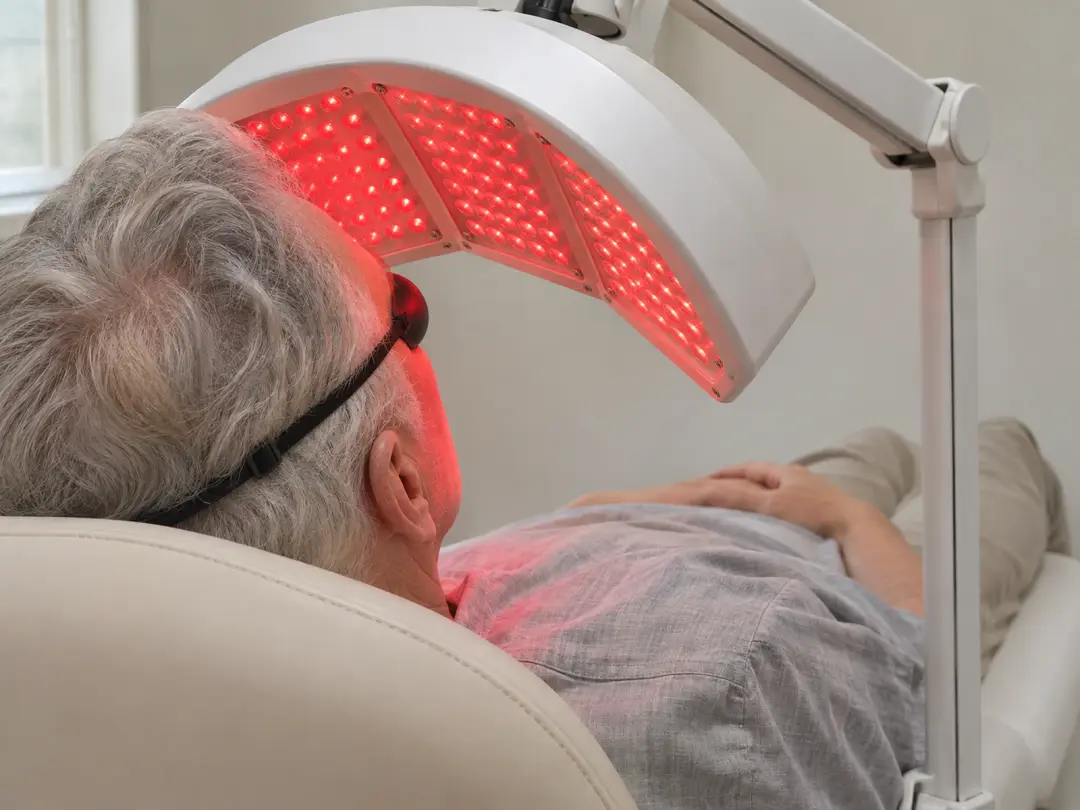
The light can be a red LED lamp or natural daylight. Light on its own, without the cream, does not treat actinic keratoses.
- 1
Prepare
5 to 10 minutesScaly areas are gently scraped so the cream can soak in
- 2
Apply cream
about 3 hours to absorbCream is applied and covered with a dressing
- 3
Light
about 10 minutesRed LED light activates the cream
- 4
Protect
2 daysThe area is covered; you avoid bright light for 48 hours
What are actinic keratoses?
Actinic keratoses (AKs) are dry, rough, scaly patches caused by years of sun exposure. They are often easier to feel than to see.
They are common on the face, ears, scalp, lips and backs of the hands. A small number can turn into squamous cell skin cancer, so treatment is usually recommended.
- Often pink, red or skin-coloured
- Feel like sandpaper
- Can come and go, or bleed when scratched
- Usually appear in groups on sun-damaged skin
What PDT is used for
Thin or moderate actinic keratoses on the face or scalp
Yes, the most common use.
Many AKs across a sun-damaged area (field damage)
Yes, treats the whole area at once.
Selected superficial basal cell carcinoma
Sometimes, after assessment.
Squamous cell carcinoma in situ (Bowen’s disease)
Sometimes, after assessment.
Thick, crusted (hyperkeratotic) actinic keratoses
Usually not; other treatments work better.
Pigmented (brown) spots, melanoma or invasive skin cancer
No.
Any spot that may be skin cancer is assessed, and sometimes biopsied, before PDT is offered.
PDT can treat some early, superficial skin cancers, but it is not used for melanoma or deeper skin cancers.
How the PDT assessment works
PDT is not right for every patient. The assessment decides whether it suits your skin, your health and your schedule.
- 1
Skin exam
Dr. Bastien examines the area and checks for spots that need a biopsy first.
- 2
Health review
We ask about allergies, medications, light sensitivity and past skin treatments.
- 3
Options
PDT is compared with cryotherapy, prescription creams and other treatments.
- 4
Plan
If PDT suits you, we book your treatment day and explain aftercare.
The assessment takes about 20 to 30 minutes.
PDT may suit you if you
- Have several AKs on the face or scalp
- Want to treat a whole area in one visit
- Prefer a short treatment over weeks of daily creams
- Can stay indoors and out of bright light for 48 hours
PDT may not suit you if you
- Are allergic to peanut or almond oil (both are in the cream)
- Have porphyria or a light-sensitivity condition
- Have thick, crusted AKs or a spot that may be invasive cancer
- Are pregnant or breastfeeding (discuss with the doctor)
Tell us about every medication you take, especially any that make your skin more sensitive to light.
Not sure this is the right treatment?
Every spot is assessed before anything is treated. If another option suits you better, Dr. Bastien will tell you.
What to expect on treatment day
Plan for about 3.5 to 4 hours. Most of that time is waiting while the cream absorbs.
- The skin is cleaned and scaly areas are lightly scraped.
- Cream is applied and covered with a light-blocking dressing.
- You wait about 3 hours. You may leave, but keep the area covered.
- The dressing is removed and the area is treated with red light for about 10 minutes.
- The area is covered again before you go home.
Bring a wide-brimmed hat and a scarf. Arrange a ride if your face is treated.
Does PDT hurt?
Most people feel stinging or burning during the light step. It usually eases within minutes to a few hours after treatment.
We use a cooling fan, short breaks and cool water spray to help. You may take acetaminophen beforehand if it is safe for you.
Daylight PDT uses outdoor daylight instead of the lamp and is usually much less painful. In Sarnia it is offered from May to September only, because daylight from November to March is not strong enough.
Red-light PDT in the clinic is available all year, including the winter months.
Recovery and aftercare
The treated skin reacts like a strong sunburn. This reaction is expected and shows the treatment is working.
- 1
Days 1 to 2
Redness, swelling, burning; skin is very light-sensitive
- 2
Days 3 to 7
Crusting, peeling, flaking; swelling settles
- 3
Days 7 to 14
Most crusts are gone; skin looks pink
- 4
Weeks 2 to 4
Pinkness fades; skin feels smoother
For the first 48 hours
- Stay indoors and keep the area covered
- Avoid direct and indirect sunlight, including through windows
- Sunscreen alone does not protect against this light reaction
After 48 hours
- Wash gently with lukewarm water
- Apply plain petroleum jelly to soothe and soften crusts
- Do not pick crusts
- Use broad-spectrum SPF 30 or higher every day
Recovery tips
- Plan two quiet days at home after treatment
- Sleep with your head slightly raised to reduce swelling
- Skip scrubs, retinoids and acid products until the skin has healed
- Wear makeup again only once the crusts are gone
Call us if you have blisters that spread, signs of infection, or redness that lasts more than 3 weeks.
Side effects and downsides
Most side effects are short-lived and settle as the skin heals. Knowing them in advance helps you plan your time off.
| How common | Side effects |
|---|---|
| Common | Redness, swelling, burning, crusting, peeling |
| Less common | Blistering, infection, cold sore flare-up |
| Rare | Temporary darker or lighter patches of skin |
The main downsides of PDT
- Stinging or burning during the light step
- 48 hours of strict light avoidance
- 1 to 2 weeks of visible redness and crusting
- Higher cost than freezing
PDT compared with other treatments
The right choice depends on how many AKs you have, where they are and how quickly you want to heal.
PDT
Best for: Many AKs over an area
Visits: 1, sometimes 2
Healing time: 1 to 2 weeks
Look after healing: Usually very good
Cryotherapy (freezing)
Best for: A few single spots
Visits: 1
Healing time: 1 to 3 weeks
Look after healing: May leave pale spots
Prescription creams
Best for: Field treatment at home
Visits: Daily for 2 to 16 weeks
Healing time: During and after the course
Look after healing: Usually good
Laser resurfacing
Best for: Extensive sun damage
Visits: 1 or more
Healing time: 1 to 2 weeks
Look after healing: Good
Surgery
Best for: Thick or uncertain spots
Visits: 1
Healing time: 1 to 3 weeks
Look after healing: Leaves a small scar
Studies show PDT and cryotherapy clear a similar share of AKs. PDT tends to give a better cosmetic result, but it is more uncomfortable during treatment.
Laser resurfacing and PDT are sometimes combined for heavy sun damage. Your assessment decides which option suits your skin.
Results and follow-up
The rough patches usually flake off over 1 to 2 weeks, and the skin feels smoother within a few weeks. Results vary from person to person.
Dr. Bastien checks the treated area at 3 months. Any AK that has not cleared can be treated again.
PDT is offered here as a medical treatment for actinic keratoses, not as a cosmetic procedure. Daily sunscreen helps reduce new AKs.
Cost and OHIP coverage
The assessment of a skin concern is covered by OHIP. PDT itself is not covered by OHIP for actinic keratoses.
Related treatments
Frequently asked questions
What is photodynamic therapy and who is it for?
PDT is a cream-and-light treatment for sun-damaged skin. It suits adults with several actinic keratoses on the face or scalp who want to treat a whole area at once.
Is photodynamic therapy covered by OHIP?
No. In Ontario, PDT for actinic keratoses is a private fee. The assessment visit is covered, and many private insurers cover part of the treatment.
How painful is PDT treatment?
Most people feel stinging or burning during the 10-minute light step. It is usually manageable with cooling and breaks, and fades within hours.
Can you go out at night after PDT?
Yes, but keep the area covered and avoid bright indoor lights for 48 hours. Darkness is safe; daylight and strong lamps are not.
What is the success rate of photodynamic therapy?
Studies show PDT clears most thin AKs on the face and scalp after one or two sessions. Results vary, and new AKs can still appear on sun-damaged skin.
How many times can you have PDT?
PDT can be repeated. For AKs, one session is usual, with a second at 3 months if needed. New areas can be treated in later years.
Is PDT worth it?
PDT is often worth considering if you have many AKs on the face and want a short treatment with a good cosmetic result. For one or two spots, freezing may be simpler.
Serving Sarnia and Lambton County
Our clinic is at 1692 Murphy Rd, Sarnia, with free on-site parking. We welcome patients from Sarnia, Point Edward, Bright's Grove, Corunna, Petrolia, Forest and across Lambton County.
Book a PDT assessment. Call the clinic or book online. Hours: Monday to Friday, 8:30 am to 4:30 pm.
Related: Skin cancer assessment · Whole-body mole mapping
Book a consultation
You don’t need a referral. Dr. Bastien examines the area first and tells you whether you need treatment.
1692 Murphy Rd, Sarnia
Monday to Friday, 8:30 am to 4:30 pm
Free parking on site