FotoFinder Whole-Body Mole Mapping in Sarnia, Ontario
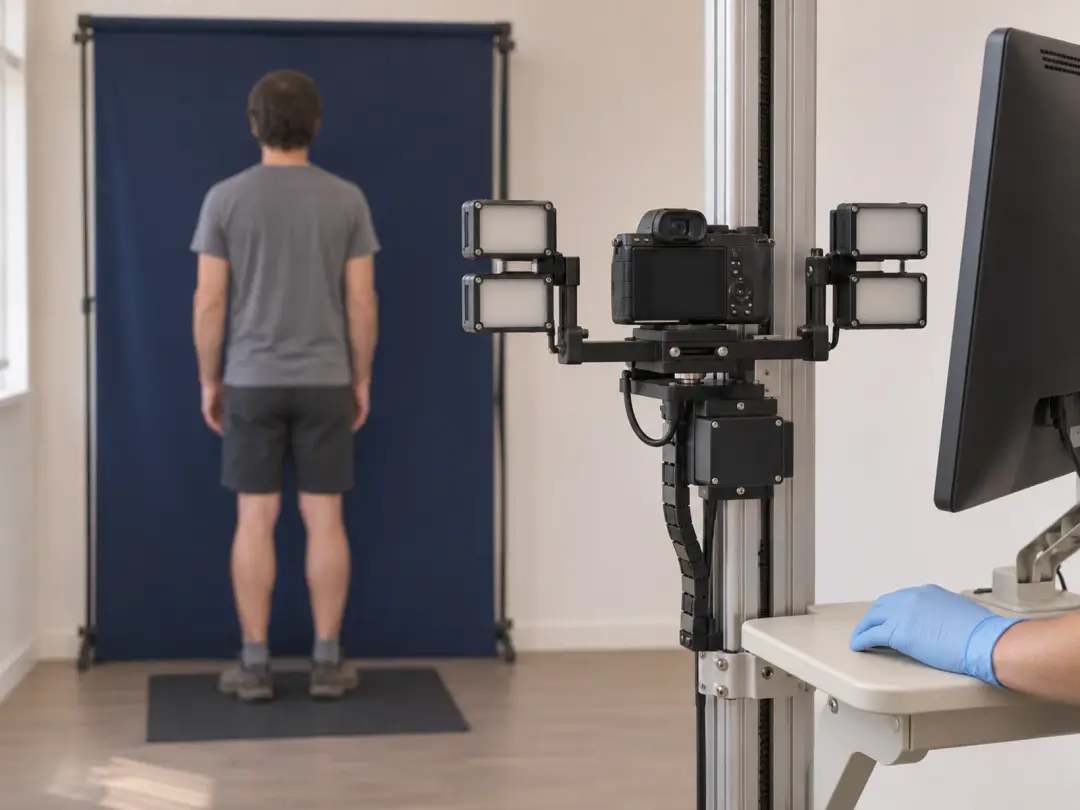
Mole mapping is a full-body skin check that records your moles with standardized photos and close-up dermoscopy images.
At a glance
- Visit
- About 45 to 60 minutes
- Anaesthetic
- None needed
- OHIP
- Private fee
Screening mole mapping is usually not covered
No referral needed.
Mole mapping is a full-body skin check that records your moles with standardized photos and close-up dermoscopy images. At later visits, new images are compared with the old ones, so new or changing moles are easier to spot.
Assessment before treatment. Every mole and skin lesion is assessed before any treatment. The assessment combines Dr. Bastien's clinical experience and dermatology training with dermoscopy, digital imaging and AI-assisted analysis where appropriate.
Doctor-led
Every image and every mole of concern is reviewed by Dr. Bastien
FotoFinder imaging
Whole-body photos and digital dermoscopy
AI-assisted analysis where appropriate
Moleanalyzer Pro gives a second look at selected moles
Treatment in the same clinic
A suspicious mole can be biopsied or removed, and skin cancers treated when suitable
Quick answers
Does it hurt?
No. It uses photos and a handheld scope.
How long does it take?
About 45 to 60 minutes for a first visit
How often?
Usually every 6 to 12 months, set by your risk
Is it covered by OHIP?
Screening mole mapping is usually not covered
Do I need a referral?
No
What is whole-body mole mapping?
Mole mapping creates a detailed photo record of your skin. It combines three parts:
Total-body photography
Standard photos of your whole skin in set poses.
Digital dermoscopy
Magnified, lit close-ups of individual moles.
Follow-up comparison
New images are matched to earlier ones to show what is new or has changed.
The FotoFinder system organizes the images. Moleanalyzer Pro, its AI-assisted analysis module, can score selected moles. Dr. Bastien makes every decision.
How it differs from a regular skin check. A regular check relies on what the doctor sees on the day. Mapping adds a stored record, so later visits compare your skin with your own photos, not with memory.
Moleanalyzer Pro is an AI-assisted lesion analysis system that has been studied in clinical research and is used in Europe. It is one tool among several and never replaces the doctor's examination.
Mole Mapping: specific treatments
Why track your whole skin?
Many melanomas appear as a new spot on skin that looked normal, not in an existing mole. A full-body record makes a new spot stand out.
A record also shows which moles stay the same. Stable moles often do not need removing, which can mean fewer unnecessary procedures.
Melanoma found early is generally easier to treat. Regular mapping aims to pick up change early, while a spot is still small.
Who should consider mole mapping?
It is most useful for people at higher risk of melanoma:
- Many moles, for example 50 or more
- Unusual or irregular moles
- A personal or family history of melanoma
- Past blistering sunburns or tanning-bed use
- Fair skin that burns easily
- Outdoor work, or years of summer sun on Lake Huron and the St. Clair River
People with few moles and low risk may only need a regular skin check. Dr. Bastien will advise which suits you.
How mole mapping is done
The visit is non-invasive. Nothing is cut or injected.
- 1
History
Sun exposure, sunburns, family history and any spots that worry you
- 2
Whole-body photos
You wear a gown and stand in a few set poses
- 3
Close-ups
Selected moles are photographed with a digital dermoscope
- 4
AI-assisted analysis
Used for selected moles where it adds information
- 5
Doctor’s examination
Dr. Bastien examines your skin, including areas photos miss, such as the scalp
- 6
Your plan
What was found, what to watch and when to return
A first visit takes about 45 to 60 minutes. Follow-up visits are usually shorter.
After your visit. Dr. Bastien reviews your images with you and explains what was found. Many people leave with reassurance and a date for their next check.
Your images are kept in your confidential clinic record and used only for your care. Photos and dermoscopy use light only, so there is no radiation.
Not sure this is the right treatment?
Every spot is assessed before anything is treated. If another option suits you better, Dr. Bastien will tell you.
What mole mapping can and cannot do
| It can | It cannot |
|---|---|
| Give a detailed record of your skin today | Find every skin cancer |
| Make new or changing moles easier to see | Photograph every area, so the scalp, skin folds and nails are checked by eye |
| Help decide which moles to watch or remove | Diagnose a mole. Only a lab test of tissue confirms skin cancer. |
Warning signs: what concerning moles can look like
Use the ABCDE guide for monthly self-checks. It helps you notice change, but only a clinician can tell what a spot is.
- A
Asymmetry. The two halves do not match
- B
Border. Uneven, jagged or blurry edges
- C
Colour. More than one colour, such as brown, black, red, white or blue
- D
Diameter. Wider than about 6 mm, the size of a pencil eraser
- E
Evolving. Changes in size, shape, colour or feel, or new itching or bleeding
Also book a check for
- A new mole that looks different from your others
- A sore that does not heal in 4 weeks
- A spot that bleeds, oozes or crusts
- A dark streak under a nail
Where skin cancers often appear
| Group | Common sites |
|---|---|
| Men | Back, chest, head and neck |
| Women | Legs and back |
| Darker skin | Palms, soles of the feet and under the nails |
Many of these are places you cannot easily see yourself. This is one reason a full-body check helps.
How often should you have mole mapping?
Higher risk or many moles
Every 6 to 12 months.
Moderate risk
Every 12 months.
A specific mole being watched
About 3 months, set by the doctor.
After a melanoma
As set by your care team.
Between visits, check your skin once a month. Book sooner if you notice a change.
Protect your skin in between. Use broad-spectrum SPF 30 or higher, wear a hat and shirt in strong sun, seek shade at midday and avoid tanning beds. Sun protection lowers your risk but does not replace regular checks.
Is mole mapping worth it?
For people at higher risk, mapping gives something a single check cannot: a record over time.
- Changes are easier to see with photos to compare
- Stable moles have a history, which can avoid unnecessary removals
- You leave with a clear plan and a follow-up date
For people at low risk, a regular skin check may be enough.
What happens if a mole looks suspicious?
A suspicious mole is never left without a plan. Depending on what is found:
| Finding | Next step |
|---|---|
| Uncertain change | A short-interval recheck, often in about 3 months |
| Suspicious mole | Biopsy or removal in clinic, with the tissue sent to a lab |
| Confirmed basal or squamous cell carcinoma | Surgical excision, cryotherapy, curettage and electrodesiccation or photodynamic therapy, as appropriate |
| Confirmed melanoma | A treatment plan, with referral when wider surgery or more tests are needed |
Dr. Bastien is authorized by the CPSO to perform surgical excisions on the face and body, including wound closures up to the level of a skin flap.
Cost and OHIP
In Ontario, mole mapping for screening is generally not covered by OHIP. Assessment of a suspicious mole is a separate, medically necessary service.
How to prepare
- Remove makeup and nail polish
- Avoid self-tanner for 1 week before
- Leave jewellery at home
- Note any moles that worry you
- Bring results from any past biopsies
- Bring your Ontario health card
Mole mapping in Sarnia and Lambton County
Dr. Bastien Mole Clinic is at 1692 Murphy Rd, Sarnia, with free parking. The clinic serves Sarnia, Point Edward, Bright's Grove, Corunna, Petrolia, Forest and the rest of Lambton County.
Hours are Monday to Friday, 8:30 am to 4:30 pm. To book, call 1-866-550-MOLE (6653) or email reception@drbastienmoleclinic.com.
Frequently asked questions
Is mole mapping painful?
No. It uses photos and a handheld scope that touches the skin gently. Nothing is cut or injected.
Can my family doctor do mole mapping?
Family doctors can check moles by eye or with a dermoscope. Whole-body mapping needs dedicated imaging equipment, so it is offered at clinics that have it.
Can a doctor tell if a mole is cancer by looking?
An exam and dermoscopy show which moles look reassuring and which need more investigation. Only a biopsy examined in a lab confirms a diagnosis.
Can harmless moles change?
Yes. Moles can darken, lighten or fade with age. Change is still worth showing to a clinician, because it is also a warning sign.
Is AI used to diagnose my moles?
No. Moleanalyzer Pro gives a second look at selected moles. Dr. Bastien makes the decision, and a lab confirms any skin cancer.
Can a mole be removed with a laser?
A mole is examined first. A mole that needs removal is usually removed surgically, so it can be tested in a lab.
Do I need a referral?
No. You can book directly.
Book a consultation
You don’t need a referral. Dr. Bastien examines the area first and tells you whether you need treatment.
1692 Murphy Rd, Sarnia
Monday to Friday, 8:30 am to 4:30 pm
Free parking on site